Smart Boat Upholstery Material Upgrades for the Next Boating Season

Preparing a boat for another season involves more than checking the engine and cleaning the deck. Interior seating also deserves careful attention, especially when cushions have spent months exposed to sunlight, moisture, and everyday wear. A well-chosen boat upholstery material can help restore the appearance of tired seating while providing better protection for future trips. Boat Upholstery Broward offers professional upholstery for boats and yachts, helping owners refresh marine interiors before another season on the water.
Table of Contents
Begin With a Careful Seating Inspection
Before choosing new upholstery, examine the condition of every cushion.
Some damage may appear obvious, while other problems remain hidden beneath the surface. Cracks, discoloration, loose seams, and flattened cushions can indicate that seating needs more than basic cleaning.
During an inspection, look for:
- Cracked or peeling surfaces
- Faded areas
- Loose stitching
- Damaged piping
- Compressed foam
- Moisture inside cushions
Identifying these problems early gives owners more options when planning an upgrade.
Consider Where Each Cushion Is Located
A boat interior contains several different environments.
Helm seating may receive direct sunlight for hours. Cockpit cushions can encounter water, sunscreen, and wet clothing. Cabin seating may have more protection but still experience humidity.
Because of these differences, material selection should reflect the location.
A durable boat upholstery material for an exposed helm may require stronger UV protection than material used in a protected cabin.
Choose Materials for Real Boating Conditions
Marine upholstery needs to handle conditions that ordinary furniture rarely encounters.
Saltwater, sunlight, humidity, rain, and repeated cleaning can gradually affect surfaces. Choosing a material designed for marine applications can provide better long-term performance.
Important characteristics include:
- UV resistance
- Moisture resistance
- Color retention
- Mold resistance
- Easy cleaning
- Resistance to regular wear
The goal is not simply to choose an attractive surface. It is to choose one that remains practical throughout the boating season.
Do Not Forget the Foam
A new exterior cannot compensate for worn-out cushioning.
Foam can lose its resilience after years of repeated pressure. When that happens, passengers may notice reduced support even when the upholstery itself still looks acceptable.
Replacing damaged foam during restoration can improve the entire seating system.
A new boat upholstery material combined with properly shaped foam can make older seating feel significantly more comfortable.
Light Colors Create a Fresh Coastal Feel
A new season can be a good opportunity to rethink the interior palette.
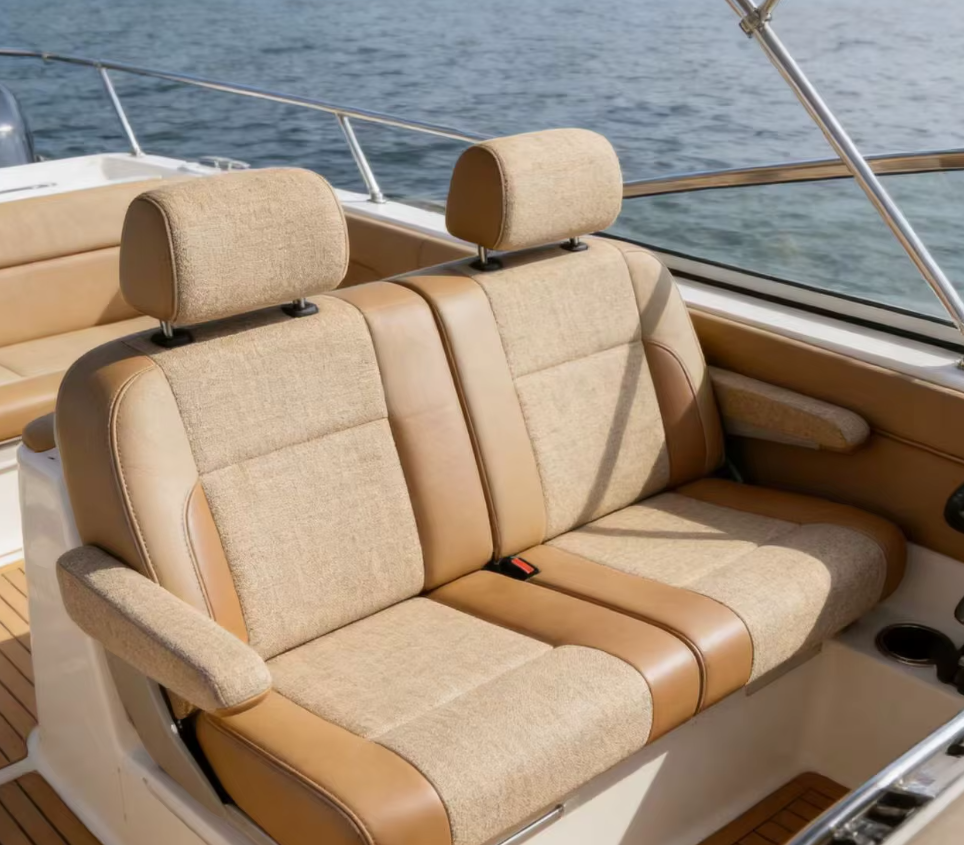
Light gray, cream, beige, and white can create a clean and open atmosphere. These colors also work well with many traditional and modern boat designs.
Owners can add contrast through:
- Navy piping
- Dark stitching
- Gray accent panels
- Blue inserts
- Decorative borders
A neutral boat upholstery material can provide a flexible foundation for these combinations.
Durable Design Does Not Have to Look Basic
Some owners associate durable upholstery with plain designs.
Modern marine materials offer much more flexibility. Textures, contrasting panels, decorative stitching, and custom details can create a sophisticated appearance while maintaining practical performance.
Two-tone seating is particularly effective because it allows owners to introduce visual contrast without covering the entire interior in a bold color.
Prepare for Frequent Cleaning
Boating can be messy.
Sunscreen, food, drinks, salt, sand, and wet clothing can all reach seating during normal trips. This makes easy maintenance an important consideration.
A practical cleaning routine can include:
- Wiping seats after outings
- Removing salt residue
- Cleaning spills immediately
- Drying wet cushions
- Following material care instructions
- Inspecting seams regularly
These habits can help protect a boat upholstery material from unnecessary wear.
Protect Seating Between Trips
The boat can continue to experience environmental exposure even when nobody is onboard.
Direct sunlight can affect exposed cushions while rain and humidity can introduce moisture. Properly fitted covers can reduce these risks.
However, cushions should always dry completely before extended storage.
Good ventilation can also help prevent moisture from becoming trapped inside enclosed areas.
Upgrade Before Problems Become Serious
Waiting until seating becomes unusable can make restoration more complicated.
Small cracks can spread. Loose stitching can open further. Damaged foam can become increasingly uncomfortable.
Addressing visible deterioration before it becomes extensive can give owners more control over the restoration process.
A timely boat upholstery material upgrade can therefore be both a comfort improvement and a preventive maintenance decision.
Match the Interior to the Way You Boat
The best upholstery choices reflect the owner’s lifestyle.
A fishing boat may need highly practical surfaces and easy cleaning. A family cruiser may prioritize comfortable cushions and stain resistance. A luxury yacht may place greater emphasis on texture, color, and custom detailing.
There is no universal solution.
The ideal boat upholstery material should support the activities that take place onboard while fitting the vessel’s overall design.
Final Thoughts
A new boating season provides a natural opportunity to inspect and improve marine seating. Upholstery that looks tired can often receive a new lease on life through updated materials, improved cushioning, and thoughtful design.
Choosing the right boat upholstery material can help protect seating from sunlight, moisture, salt, and everyday use while creating a more comfortable environment for passengers. With proper installation and consistent maintenance, a refreshed interior can be ready for many enjoyable days on the water.
More interesting articles you can explore here.
Share this content:



Post Comment